4 min read
Field Mapping and Data Hygiene: Getting Your Staffing Data Right.
Your data decides whether the new system works. A practical guide to field mapping and data hygiene for staffing firms moving to or running Bullhorn.
 Written byLeanne Courtney
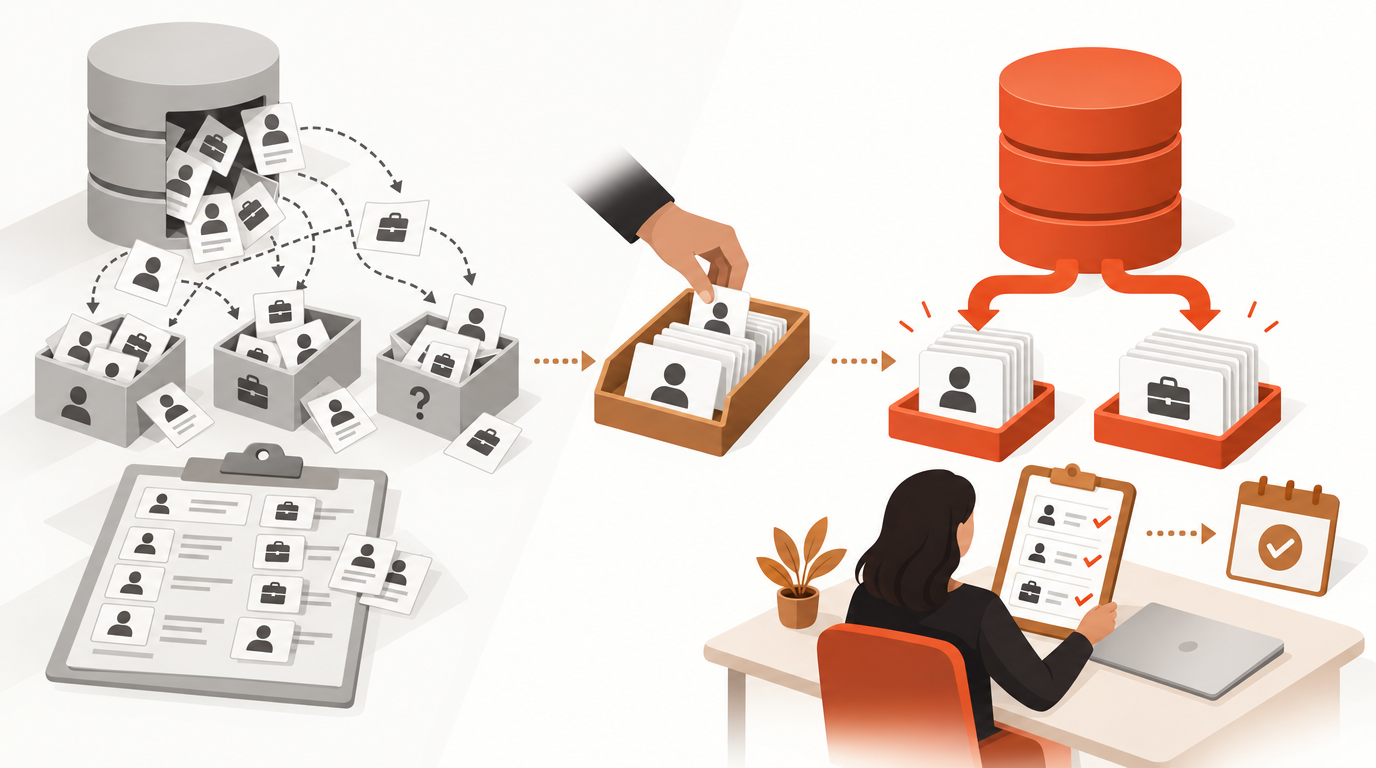
Every migration conversation starts with the exciting part: the new platform, the cleaner workflow, the features the old system never had. Then the data moves across, and half of it lands in the wrong place or does not land at all. The project that looked finished suddenly is not.
Field mapping and data hygiene are the unglamorous details that decide whether your new system works. Get them right and the platform feels like it was built for you on day one. Get them wrong and your team quietly goes back to spreadsheets while the expensive new system fills up with junk nobody trusts. I have seen both outcomes across 20+ implementations in four countries, and the difference is almost always in the data, not the platform.
This is the practical version. For the full migration framework, see how to build an ATS migration plan. Here is how to get the data half right.
1. Map fields to how you work, not how the old system worked
The first mistake is to copy the old system field for field. Your last platform shaped how you record data, and some of that was its limitation, not your process. Before you map anything, write down how your team actually works today and how you want to work in the new system. Map fields to that. A migration is the one moment you get to fix the structure, so use it. Mapping the old mess straight across just moves the mess.
2. Decide what moves and what stays behind
Not all of your data deserves a seat in the new system. Dead candidate records, clients you stopped working with years ago, duplicate contacts, notes nobody will read again: moving them costs you nothing but clutter and a slower, more expensive migration. Decide what moves and what stays behind before you map a single field. A smaller, cleaner dataset is easier to map, faster to load and more trustworthy on day one. Your data is only half the job, and the first half is deciding what is worth keeping.
3. Standardise your values before you map them
Free-text fields are where data quality goes to die. If five recruiters have typed the candidate status five different ways, that field cannot be mapped to a clean picklist without a decision about what the values should be. Standardise your statuses, your source values, your job categories and your location formats before the move. Agree the list once, map everyone to it, and your reporting works the day you go live instead of six months later.
4. Clean the data before the move, not after
It is always tempting to move everything now and tidy it up later. Later never comes. The deduplication, the missing fields, the wrong formats: fix them in the old system or in a staging file before the load, while you still have the time and attention of a migration project. Once the data is live and the team is working in the new system, nobody goes back to clean three years of history. Clean first, load second.
5. Name an owner for data quality after go-live
Clean data on day one drifts into messy data by month three unless someone owns it. Name a person responsible for data quality: duplicate checks, required fields, a quick weekly review of what is getting entered. This does not need to be a full-time job, but it does need a name against it. Agencies without a data owner are the ones whose reporting slowly stops reconciling until nobody trusts the numbers. This is exactly what fractional system administration is for.
6. Build hygiene into the daily workflow
The best data hygiene is the kind nobody has to think about. Make the fields that matter required so a record cannot be saved half-empty. Use validation so a phone number has to look like a phone number. Let automation catch duplicates, flag stale records and chase the missing details instead of relying on memory. When the system holds the standard, your data stays clean without a weekly fight.
Clean data is a decision, not an accident
A new platform does not clean your data for you. Field mapping decides whether your history survives the move in a usable shape, and data hygiene decides whether it stays that way. Get both right and you get the 40% efficiency gain and the ten or more hours a week back, because your team trusts the system and stops working around it.
Achieve plans the field mapping and data cleanup as part of every Bullhorn implementation, so your data lands right the first time. If your current system is filling up with data nobody trusts, let us help you fix it.