
Bringing AI to Recruitment: Bullhorn Amplify and the Critical Prep Work
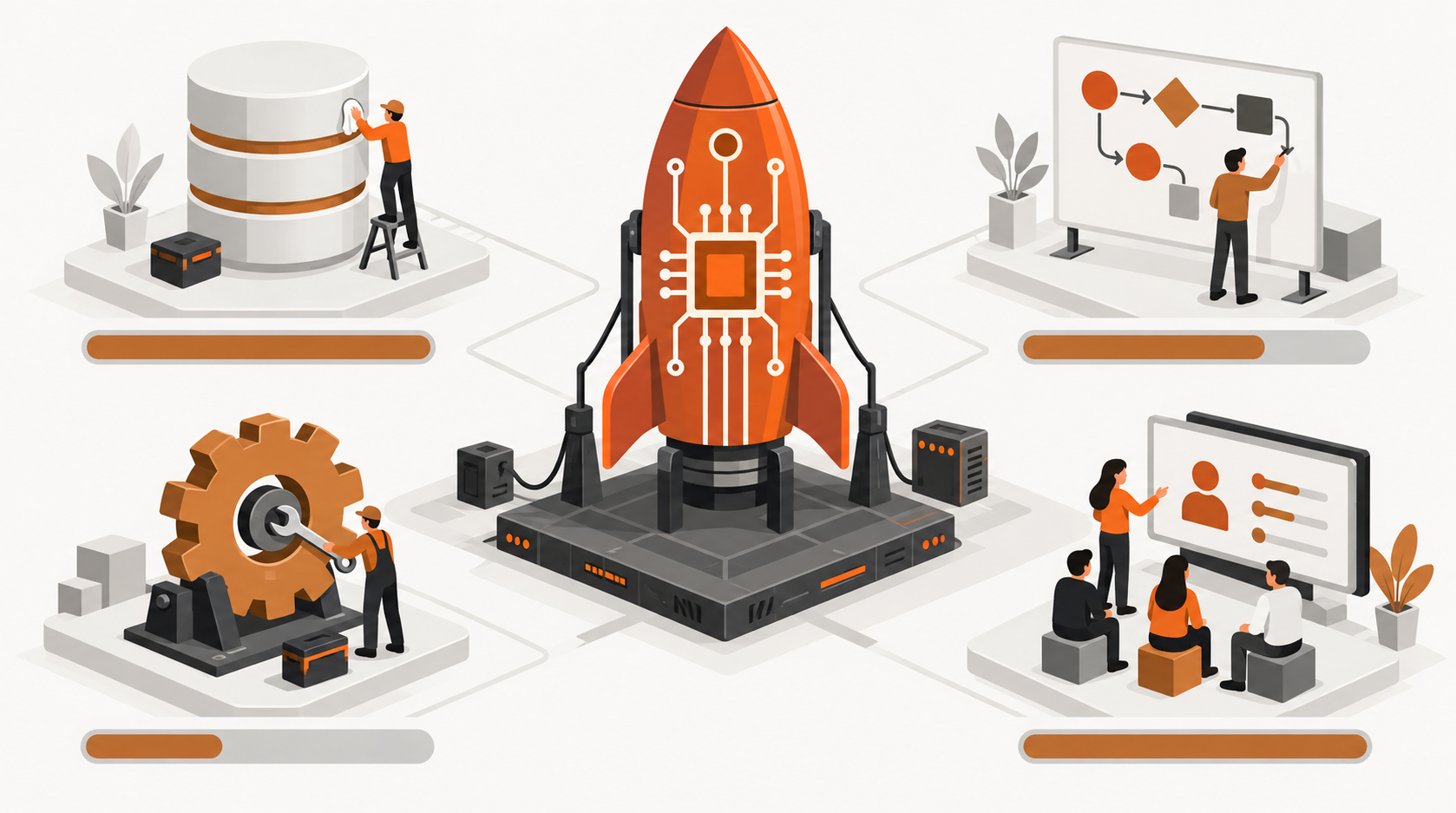
Buying Bullhorn Amplify and being ready for it are two different things. If the use case is vague, the data is unreliable or the workflow is not understood, adding AI can make the confusion move faster.
Bullhorn Amplify brings AI into recruitment work across Bullhorn's ATS and CRM. The opportunity is real, but the results depend on the preparation around the product: the process, data, automation, training and measures of success.
What is Bullhorn Amplify readiness?
Bullhorn Amplify readiness means that a recruitment company has chosen a useful AI use case, mapped the workflow, checked the data and automation involved, prepared the people who will use it and agreed on how results will be reviewed.
It does not mean cleaning every record or redesigning the whole business before starting. It means knowing enough about the selected workflow to introduce AI deliberately.
Launching every Amplify feature at once creates noise
When a new piece of technology has a lot of capability, the temptation is to show the team everything at once.
Here is Match. Here is Screen. Here is Outreach. Here is Transcribe. Here are all the other things Amplify can do.
People leave the session impressed, but also slightly overwhelmed and unsure about where they should begin.
I would start somewhere much simpler.
What is currently taking too long? Where are recruiters losing good candidates? Which repetitive tasks are getting in the way of conversations? Where does the existing Bullhorn workflow regularly break down?
Once you know the problem, you can decide where Bullhorn Amplify fits.
Bullhorn's own guidance recommends starting with one or two features rather than trying to launch everything at once. That makes sense to me. It gives the team a clear use case and gives the business a much better chance of seeing whether it is working. Bullhorn Amplify getting-started guide
Map the recruitment workflow before adding AI
Before adding AI to a recruitment workflow, you need to understand the workflow that already exists.
Not the process somebody documented three years ago. The one people are actually following.
How does a job enter Bullhorn? Is the information complete? Where do applications come from? How are candidates reviewed and contacted? When are submissions recorded? Which steps happen outside the ATS?
If the existing process is inconsistent, adding AI can make the inconsistency move faster.
I like to map the current process, identify the parts that are creating friction and then decide where Amplify can make a useful difference. That could be matching candidates when a job is created, screening applications, enriching candidate information or supporting more personalised outreach.
The aim is not to fit Amplify everywhere.
It is to use it where it can genuinely improve the way the team works.
Bullhorn data preparation should follow the Amplify use case
This is normally the point where businesses become worried about data.
Most recruitment databases are not perfect. There will be old candidate records, incomplete fields, inconsistent job titles and information sitting in notes instead of structured fields.
You do not need to clean every record in Bullhorn before starting with Amplify.
You do need to understand which information the feature you are introducing will use.
Bullhorn explains that different Amplify skills read different information from the ATS. Match, Screen, Enrich, Outreach and Transcribe do not all work from exactly the same data. User permissions and the structure of the records also affect what Amplify can access. How Bullhorn Amplify works
That means the data preparation should be connected to the use case.
If you are introducing candidate matching, focus on the quality of job and candidate information. Are job titles consistent? Are locations usable? Are skills and employment histories current? Do candidate statuses reflect whether somebody is genuinely available?
If you are using Amplify for outreach, look at the candidate and contact information feeding the communication.
If you want to generate candidate submissions, check the fields and templates that will be used to build them.
Clean the information that matters first. Do not let the size of the entire database stop you from making progress.
Bullhorn Automation needs its own readiness check
Some of the most useful Amplify workflows connect closely with Bullhorn Automation.
That means the business needs somebody who understands how the existing automations work, what triggers them and what should happen when a person does not meet the criteria.
Suppression lists, branching logic and record updates may not sound like the exciting part of AI. They are still important.
Before introducing more automation, check what is already live. Make sure processes are not overlapping, candidates are not going to receive conflicting communication and the right information is being written back to Bullhorn.
Bullhorn's Amplify Readiness Guide also recommends reviewing business goals, recruitment processes, automation capability and data hygiene before go-live.
The prep work is not separate from the AI implementation. It is part of it.
Define the recruitment outcome before measuring adoption
It is difficult to know whether Bullhorn Amplify is working if nobody agrees on what it is meant to improve.
More logins are not necessarily the answer.
A good measure might be reducing the time it takes to create a shortlist, finding more candidates from the existing Bullhorn database, reviewing applications faster or giving recruiters more time for conversations.
For one business, success may mean increasing redeployment. For another, it may be improving the speed and consistency of screening.
Choose a small number of measures that connect to the problem you started with.
I would also collect feedback from the recruiters using Amplify. A report can tell you that a feature was used. The recruiter can tell you whether it helped, where the result fell short and what would make it more useful next time.
Bullhorn Amplify training should use real jobs and records
This is the part I care about most.
A technically sound Amplify rollout can still struggle if the team does not understand why it is being introduced or how it fits into their day.
Training should use real Bullhorn jobs, candidate records and workflows. Let recruiters try the technology themselves. Review the results together and talk honestly about what worked and what did not.
People need enough confidence to keep experimenting after the training session ends.
They also need to understand that AI output can vary and still requires review. Bullhorn Amplify can bring information forward, complete repetitive work and help people move faster. Recruiters still bring the context, relationships and judgement.
The aim is not to take recruitment away from recruiters.
It is to give them better support and more time for the work that needs a person.
Preparation is what turns Bullhorn Amplify access into adoption
Bullhorn Amplify has a growing range of capabilities across the recruitment lifecycle. Bullhorn's current Amplify overview shows just how much the product now covers.
That can make it tempting to move quickly.
But the critical work happens before and around the launch: choosing the right use case, mapping the workflow, preparing the relevant data, checking the automation, training the team and agreeing on what success should look like.
None of that is as exciting as switching on a new AI feature.
It is what gives the feature a chance of becoming genuinely useful.
Achieve helps Bullhorn customers prepare for and adopt Amplify through practical readiness reviews, workflow and data planning, automation advice, training and ongoing adoption support.
Frequently asked questions about Bullhorn Amplify readiness
What should we do before implementing Bullhorn Amplify?
Choose one or two useful use cases, map the current workflow, identify the data each feature needs, review related Bullhorn Automation processes and decide how recruiters will be trained and supported.
Does our Bullhorn database need to be completely clean first?
No. Focus on the records and fields that affect the selected use case. Candidate matching needs useful job and candidate information, while outreach and submissions rely on different fields and templates.
Which Bullhorn Amplify feature should we implement first?
Start with the feature that addresses a clear operational problem and can be tested safely with a defined group. The right starting point may be matching, screening, enrichment, outreach or another feature, depending on how the business works and what its subscription includes.
Can Achieve help us prepare for Bullhorn Amplify?
Yes. Achieve provides readiness reviews, workflow and data planning, Bullhorn Automation advice, practical training and adoption support for recruitment companies implementing Amplify.