The Real Measure of AI Adoption in Recruitment
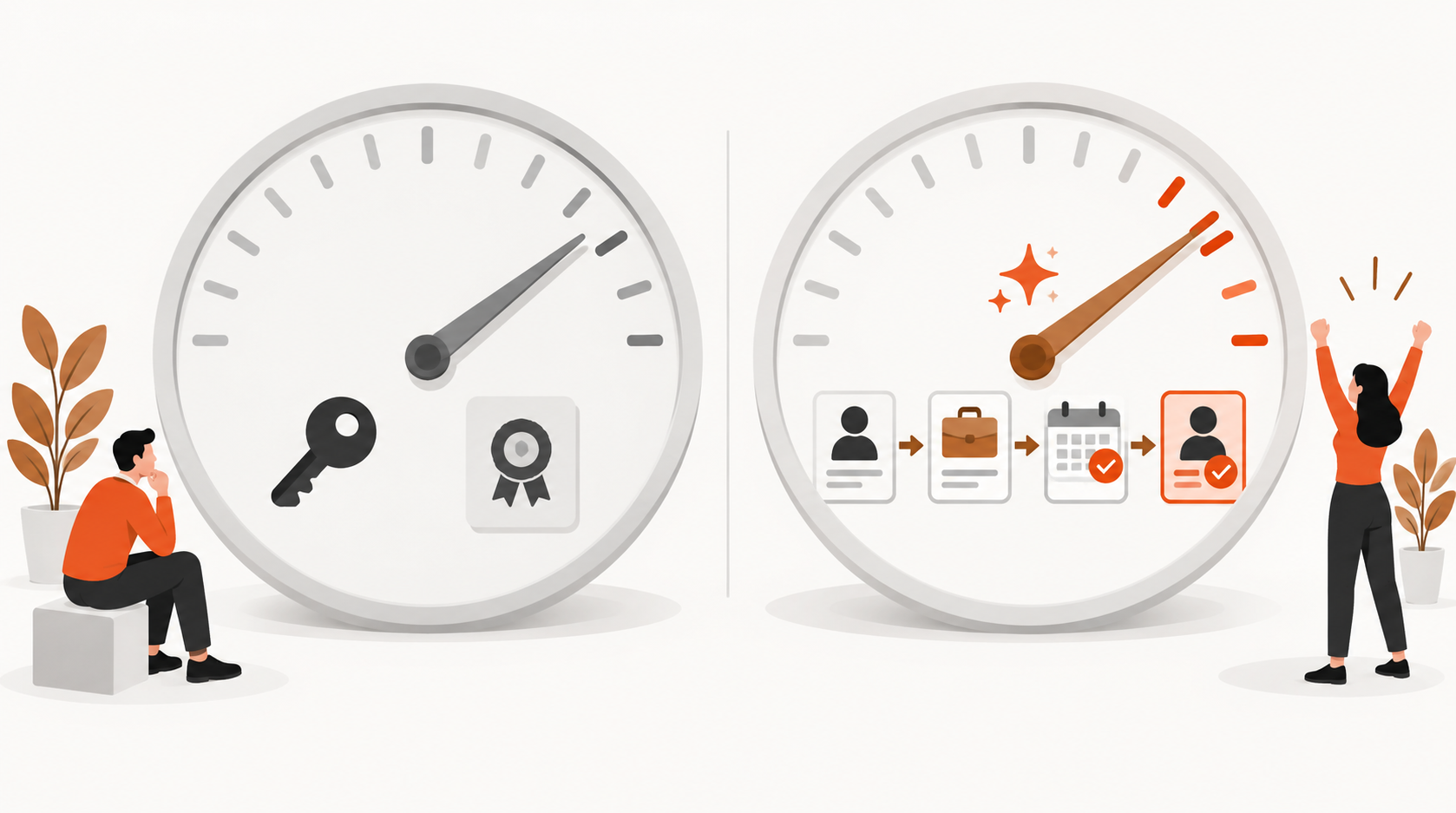
Giving a recruitment team access to AI is not the same as getting them to use it well. Licences, demonstrations and login reports can all look positive while the day-to-day recruitment process stays exactly the same.
Real AI adoption starts when a recruiter chooses the tool for a live piece of work, understands the result and knows when human judgement still needs to lead.
What does AI adoption in recruitment mean?
AI adoption in recruitment means that people use AI-supported tools consistently within real ATS and CRM workflows to improve a defined outcome. That could mean finding candidates already in the database, reviewing applications, preparing a submission or reducing repetitive administration.
Usage alone is not the outcome. The technology needs to help the team do something useful.
Recruiters need to know where AI fits into their day
Most recruiters do not need another long explanation of what AI might be able to do in the future. They need to know how it can help with the job sitting in front of them now.
Can it help find candidates already in the ATS? Can it review applications for an urgent role? Can it summarise the information on a candidate record before a call? Can it help draft a personalised message without making it sound like it was sent to 500 people?
When the use case is connected to real work, the technology becomes much easier to understand.
AI recruitment training should start with one real task
Trying to show people everything at once usually has the opposite effect. They leave the session with a lot of information and no clear idea where to begin.
I would rather take one live job, one frustrating process or one repetitive task and work through it properly.
Let the team try the AI feature using information from their own ATS or CRM. Look at the result together. Talk about what was useful, what was not and how the request could be improved.
That creates confidence because people can see the connection between the tool and their own desk.
Where AI recruitment software can fall short
I have seen people try an AI tool once, receive an average answer and decide it does not work.
That is a bit like running one poor candidate search and deciding there is nobody useful in the entire database.
People need enough support to try again, adjust what they are asking and understand what information the system is working with. They also need honest guidance about the things AI is good at and the places where human judgement still needs to lead.
The goal is not blind confidence in the technology. It is informed confidence.
Measure workflow outcomes, not only AI logins
Logins and usage reports can be helpful, but I would not use them as the only measure of AI adoption.
I want to know whether a recruiter found somebody in the existing database who would otherwise have been missed. Whether an urgent shortlist came together faster. Whether less time was spent on administration. Whether the team had more time for candidate and client conversations.
Those are the outcomes that show the technology is becoming part of the recruitment process rather than another feature sitting inside the system.
You do not need to reinvent every ATS and CRM workflow on day one.
Start with one useful task. Give people the confidence to try it on real work. Stay close enough to answer questions and share the wins when they happen.
That is normally where genuine adoption begins.
Achieve helps recruitment teams turn AI features into practical workflows their people understand, trust and use.
Frequently asked questions about AI adoption in recruitment
How do you introduce AI to a recruitment team?
Start with one clear problem and one live workflow. Explain what the tool uses, let recruiters test it on familiar work and agree on how its output should be reviewed. Support after the first session matters because the first questions normally appear during real use.
What stops recruiters from adopting AI?
Common barriers include unclear use cases, poor data, generic training, low trust in the output and workflows that make the AI feel like extra work. These are implementation problems, not simply resistance to change.
How should a recruitment company measure AI adoption?
Measure outcomes linked to the selected use case. Useful examples include time to shortlist, database reuse, application review time, administrative time saved and recruiter confidence. Usage data can support the picture, but it should not be the whole picture.
Does Achieve help recruitment companies implement AI and automation?
Yes. Achieve helps companies choose practical AI use cases, prepare ATS and CRM workflows, improve relevant data, configure automation, train teams and measure adoption.