11 min read
Supercharge Your Agency with AI: A Practical Guide.
Practical AI advice for staffing agencies from Leanne Courtney's Candidately panel. Where to begin, what to ask vendors, and how to maintain authenticity.
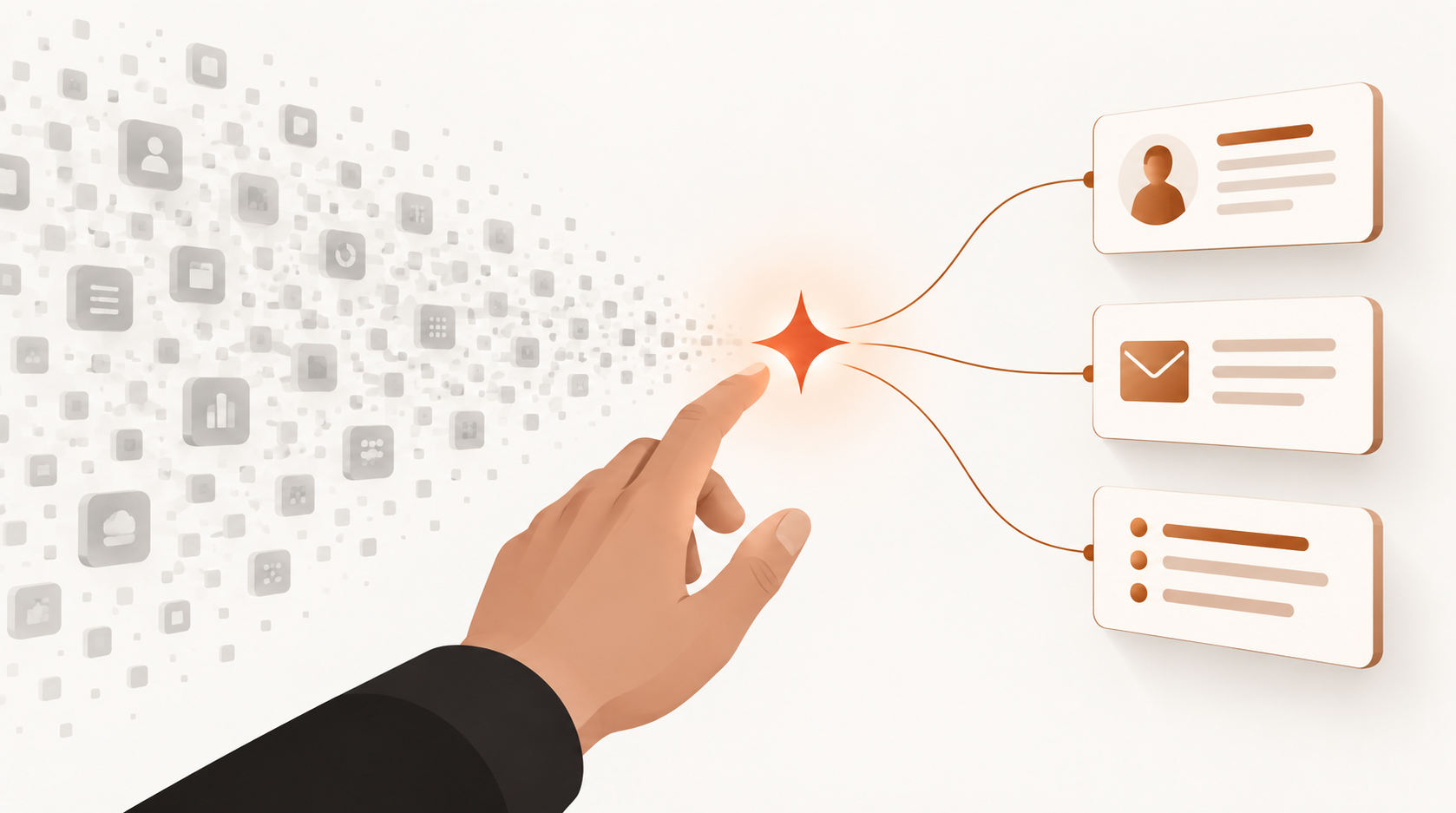
In November 2023 alone, there were 10,000 AI tools marketed and released. Ten thousand. In one month.
If you're feeling overwhelmed by AI, you're not alone. And if you're facing resistance from your team, that's normal too.
I joined Lauren Jones, Alessandra Willsher, and Erin Pittman for a panel discussion on how staffing agencies can actually use AI without losing their minds or their humanity. Here's what we talked about.
Why There's So Much Resistance
The stats tell one story: 73% of US companies have adopted some form of AI. 70% of executives expect further investment. AI is everywhere, and it's not going away.
But at the desk level? The sales level? Management? There's equal amounts of resistance.
Part of it is fear. When AI exploded onto the scene, the headlines were all doom and gloom. "AI will replace 85,000 jobs." What they didn't tell you was that it would also create 95,000 new ones. Prompt engineer is now one of the most in-demand roles. But fear sells, so that's what we got.
Here's the thing about fear: it's often just false emotion appearing real.
I think with any big innovation, whether it was the iPhone or the internet, the possibilities seem endless at first. And when possibilities seem endless, it's natural to feel uncertain. Where does this stop? What can't it do?
But if you flip the conversation and focus on what it can do for you specifically, it gets interesting. It becomes something to play with rather than something to fear.
Where to Actually Begin
The question I hear most often is: where do I start?
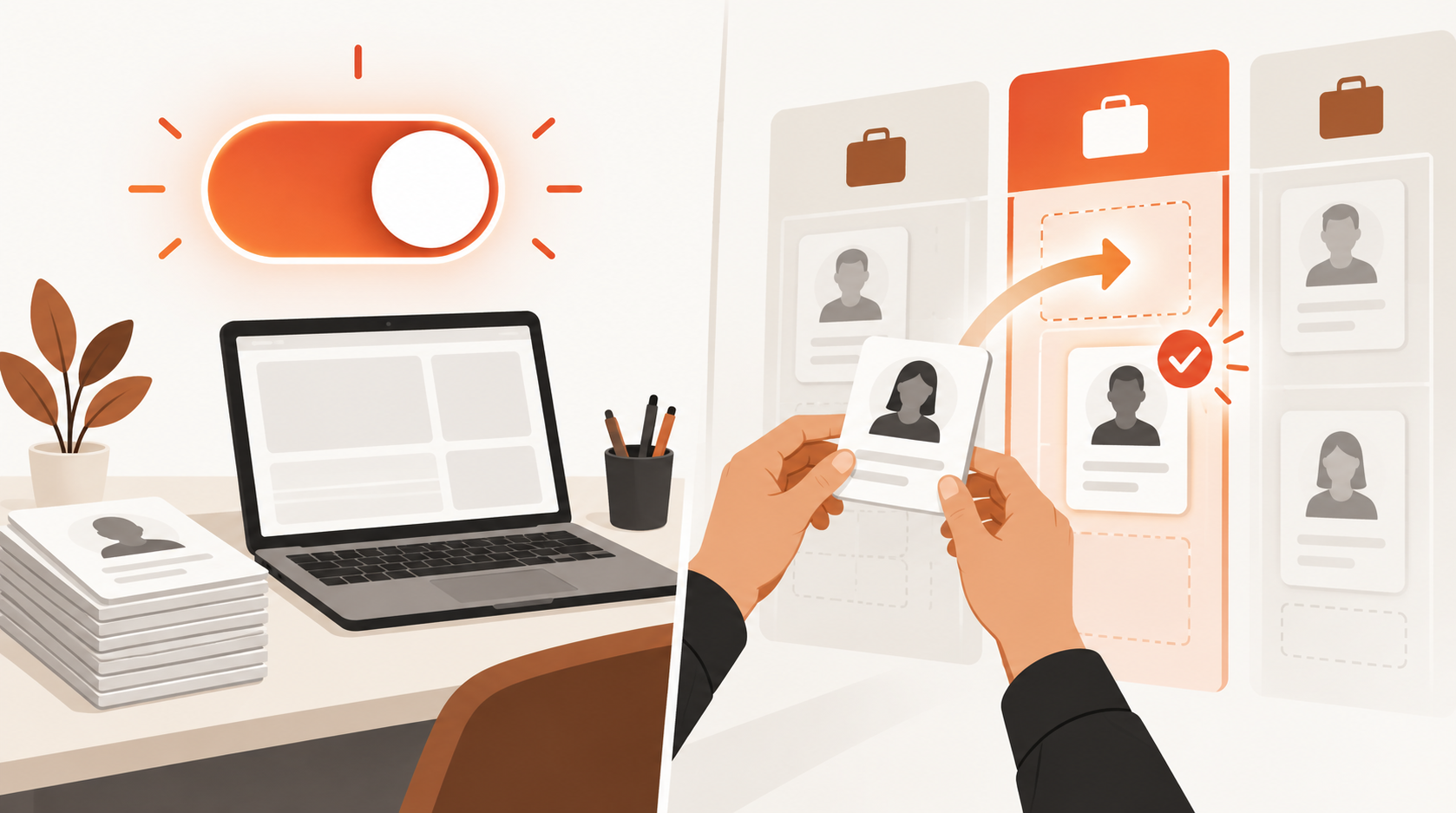
My answer: start small. You don't have to put AI everywhere just because it's the biggest thing happening right now. Maybe it's writing an email. Maybe it's generating a submission. You don't need to overhaul your entire operation on day one.
Start small, see what works, and then you'll start having ideas. Maybe I can include it here. Maybe I could use it for prescreens. You build up naturally.
Here's what else helps:
Tap into your curious people. AI isn't just showing up at work. People are reading about it, playing with ChatGPT at home, experimenting on their own time. Find those people. Create a Slack channel or a Teams channel for folks already using it. They'll become your advocates when you do roll something out.
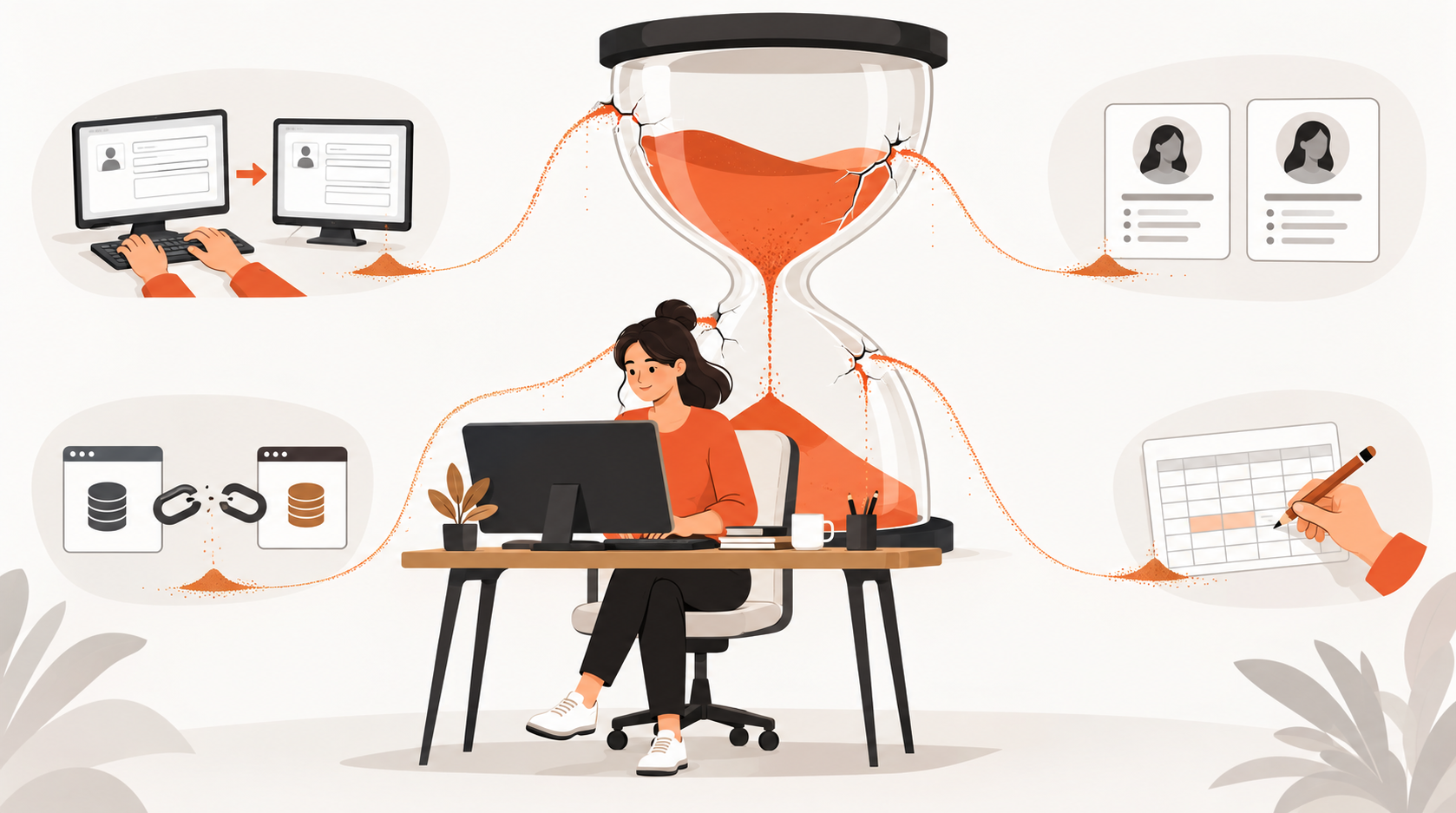
Look for the hidden factories. Where are the inefficiencies in your organization? Where are people bogged down with administrative tasks? Where is there hidden dissatisfaction? Listen to your team. They'll tell you where the pain is.
Explain the purpose. Before you roll anything out, explain to your team that AI is not there to replace them. It's there to take away the mundane stuff so they can focus on where they actually add value. Help people get over that initial fear, and adoption gets much easier.
The Real Threats (And How to Handle Them)
AI is built by people. And people have biases. A lot of AI is tested on specific demographics, usually the same demographic that built it. So there are inherent biases baked in.
Just because you used AI doesn't mean the output is unbiased. You still need to look at it. You still need to make it your own. AI gets you 95% of the way there, but that last 5% is where you add the human judgment.
Another thing people don't always understand: AI doesn't actually "know" anything. It's looking for the most likely relevant response based on what it's been trained on. That's why ChatGPT can give you wrong math answers. It's not calculating. It's pattern matching.
Understanding what the tool is actually doing makes it so much more powerful. You stop expecting magic and start using it strategically.
And then there's the threat of not empowering your people at all. Putting up firewalls, saying "you can't use it," treating it like something dangerous. That's a mistake. You've got to educate and inform. Let them try. Let them experiment. A lot of the fear goes away once people actually use the tools.
The Exciting Possibilities
Here's where it gets fun.
One of our clients had a challenge. They had core operations in Quebec but the CEO didn't speak French which made communicating with their Quebec employees difficult. AI allowed them to make a video where the CEO spoke French. His mouth was moving the way it would if he were actually pronouncing French words. He sounded really like a francophone. Some of the feedback we got was, "I didn't know the CEO spoke French so well."
That's inclusion. That's connection. Before AI, the best we could do was subtitles. Now we can actually bridge the language divide in a way that feels real.
Erin Pittman brought up neurodivergence, which I thought was brilliant. Think about employees who struggle with executive function tasks. Calendar planning. Project planning. Starting a hard email. The amount of energy that can go into starting a difficult message is real. AI can help. Throw in the details you're trying to communicate, the tone you want, and let it give you a starting point. That's not laziness. That's using a tool to help people do their jobs.
And think about learning. How long does it take to ramp up a new recruiter? Now imagine they can ask AI: What does a CNC machinist do? What questions should I ask an endocrinology RN? What's a good boolean string for this IT role? That's education on demand. That's reducing time to effectiveness.
I love that I never have to stare at a blank page again. AI gives me a skeleton. From there, I can build.
Where We're Seeing the Most Impact
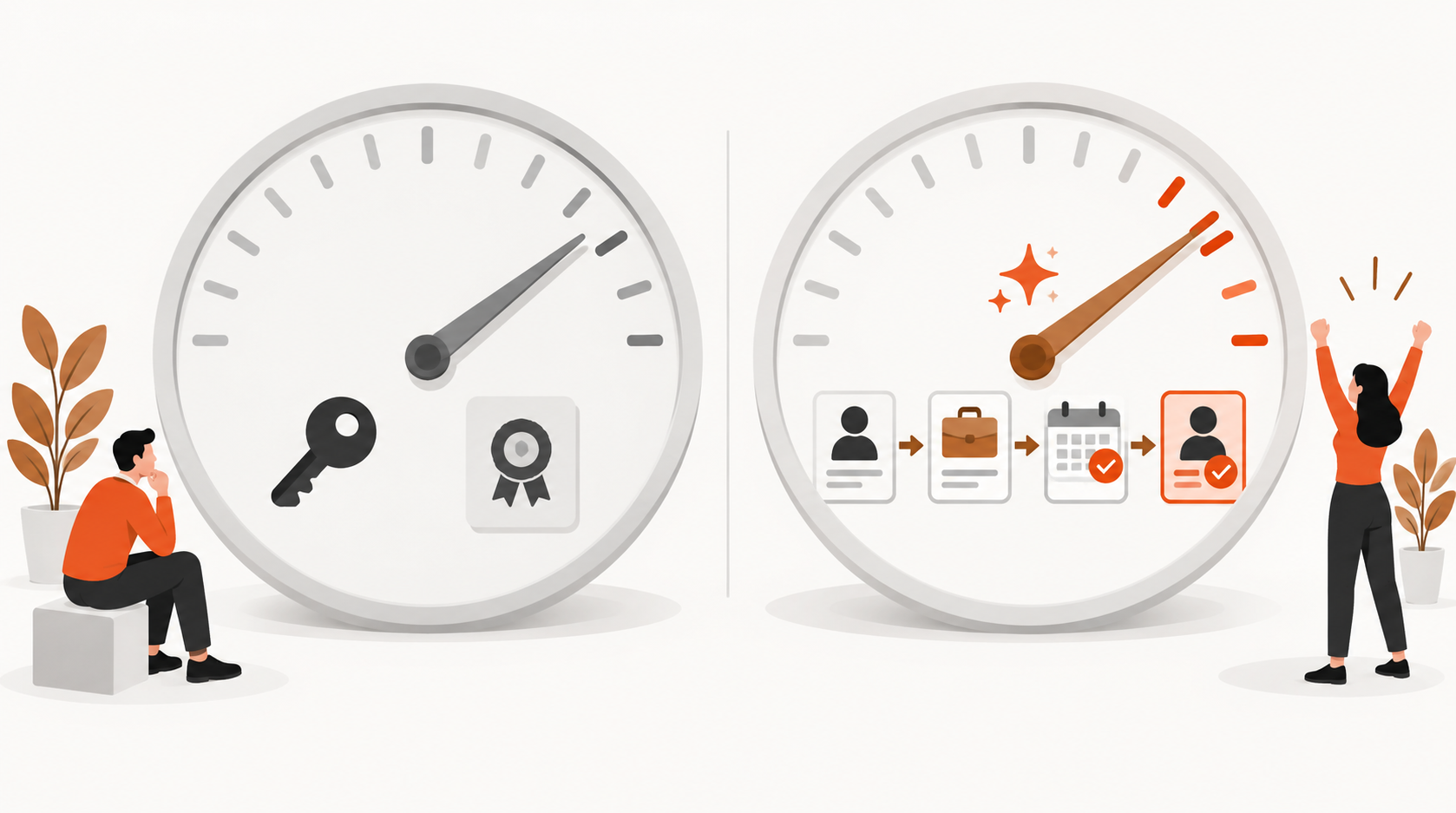
Our clients are saying the biggest impact of AI has been pre-submission. That's where we started. But they were working toward peppering AI throughout the entire process.
Here's where agencies are seeing results:
Job descriptions. 98% of job descriptions are written with masculine bias. Women only apply if they meet 100% of the requirements. AI can write descriptions without bias. It can also fix the fact that the average job posting in our industry is six and a half years old.
Interview questions. Instead of using the same template for every candidate, you can generate questions specific to the role, the job description, the intake notes, even the candidate's background. You show up more prepared. You ask better questions.
CV formatting. I know agencies that had entire departments formatting CVs, especially for government submissions. AI can handle that.
Sales research. Walking into a meeting? AI can tell you top employers in the area, unemployment rates, competitor information. Real-time intel. You can educate yourself on your phone right before the meeting.
Prospecting. We've been experimenting with AI for cold outreach. The key is: don't lose who you are. The message AI spits out should still sound like you. How would you introduce yourself? How would you present this candidate if you were standing in front of the client? Keep that in mind.
Staying Human in an AI World
This industry is human. Looking for a job is lonely and hard. Finding talent is frustrating. There's so much emotion in what we do. That's why I've stuck around.
So how do we use these tools and stay human?
Ask yourself: what would I want to receive? We ran a workshop with our sales team on exactly this. What would you like to read? What would make you feel like a real person was talking to you? If you're not sure, ask a colleague, ask your partner, ask your kids. Does this sound like me? Does this sound human?
Remember there's a person on the other end. Especially when you're working remotely and you're not in an office with people every day, it's easy to forget. Every message you send lands in front of a human being. AI can help you connect better, but only if you keep that in mind.
Add your voice. AI gives you a draft. You add the personality. You add the tone. You make it yours. Alessandra mentioned that GorillaWorks built prompts with different tone options so people aren't generating the same message every time. That's smart.
Don't skip the hard messages. Nobody likes rejecting a candidate. But you can use AI to write that email in a way that still feels caring. You can include resources: where else they might apply, what accreditations they might need, what other options exist. A no doesn't have to feel like a door slamming. It can feel like a redirect.
The priority for 2024 and beyond is personalization. Taking these tools and making sure whoever receives your message feels like it was meant for them.
What to Ask AI Vendors
With 10,000 new products coming out in a single month, the buying process is overwhelming. Here's what to ask:
What are you doing with PII? This is non-negotiable. Where is candidate information going? How is it protected? Alessandra mentioned that GorillaWorks strips all PII from resumes before using any external AI tool they don't control. That's the standard you should expect.
Where does the data live? Have they built their own model, or are they relying on ChatGPT? If they're using ChatGPT, what guidelines do they have to protect your information?
What's on your roadmap? This helps you avoid buying redundant technology. If a vendor is about to release something that overlaps with another tool you're considering, you want to know.
Do you need beta testers? Getting in early lets your organization have real input into the product you're purchasing. That's valuable.
Compare. Don't look at one tool and sign up immediately. Minimum: look at one, take it away, have a think. Is there anything else out there doing something similar? Ask the same questions to multiple vendors and see what you get.
I do a lot of demos. If you want to talk through what questions to ask for a specific tool, reach out. I'm happy to help.
Key Takeaways
-
Start small. You don't need AI everywhere. Pick one pain point, one inefficiency, and experiment there first.
-
Empower your people. Fear goes away when people actually use the tools. Let them try. Create space for curiosity.
-
Stay human. AI gets you 95% of the way. You add the last 5%. Make it sound like you. Remember there's a person on the other end.
-
Ask hard questions. Where's the data? What's the roadmap? Don't sign after one demo. Have a think.
Let's Figure This Out Together
Not sure where AI fits in your operation? That's exactly the kind of conversation I have with clients.
Book a free 30-minute call with me. We'll talk through your tech stack, your team's capacity, and where AI might actually help (not just where it's trendy). No pitch, no pressure. Just clarity on your next step.
This post is based on my appearance on the Candidately webinar "Supercharge Your Agency with AI." Watch the full session here.
About the Author
I'm Leanne Courtney, founder of Achieve. At the time of this panel, I was managing the full tech stack, including recruiting tools, middle office, and sales enablement with AI peppered throughout. That hands-on experience is what I bring to every engagement now.
I spent 10+ years in tech operations, including 5+ years as a systems administrator at two of Canada's largest staffing companies. When something broke at 8 AM, my phone rang. When a new system needed to roll out, I made it happen.
Based in Toronto, working with clients across North America, Europe, the UK, and Australia/New Zealand.
Connect: LinkedIn | achievewith.tech
About the Panelists
This was an all-female tech panel, and it made my heart happy. Huge thanks to everyone involved.
Lauren Jones from Candidately is a self-described data nerd. She hosted the session and brought the energy (and the stats). She's also been giving keynotes on AI since it took over every conversation in the industry.
Alessandra Willsher is the Director of Produth Growth and Experience at GorillaWorks, where they build recruitment technology with AI integrated throughout. She brought the product perspective and some great insights on bias and authenticity.
Erin Pittman is the Operations Director at Leap Consulting Solutions, where she helps customers figure out what kinds of AI solutions are right for them. She brought the implementation angle and made a fantastic point about neurodivergence and inclusion.